From Okra to Chocolate: A Quiet Research Breakthrough at KNUST
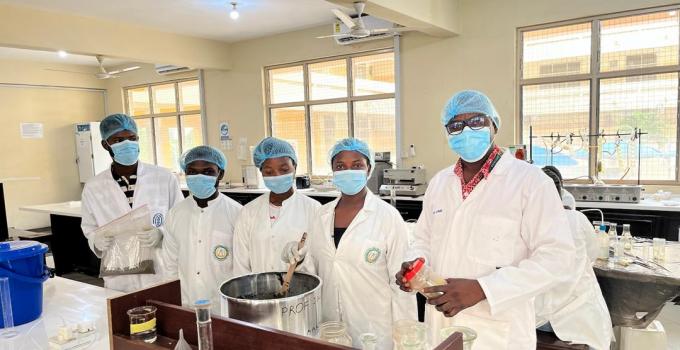
In a laboratory far from the confectionery aisles where consumers make their choices, a familiar Ghanaian vegetable is being reimagined as a key ingredient in chocolate.
At the Department of Food Science and Technology, Kwame Nkrumah University of Science and Technology, researchers are making steady progress on an ambitious project that could reshape how chocolate is formulated, using pectin extracted from okra as an alternative to lecithin.
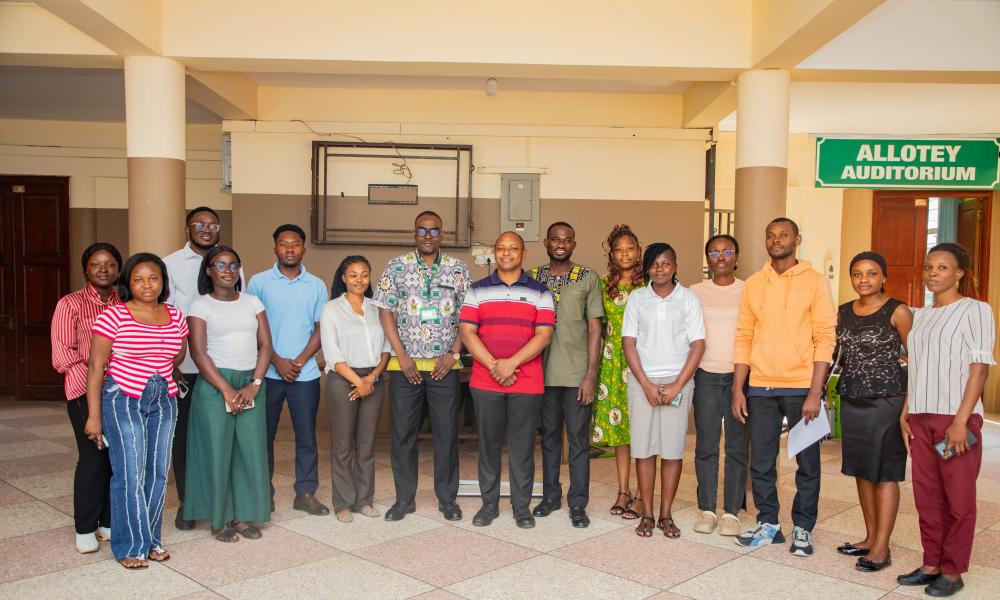
The work is being led by Prof. Jacob K. Agbenorhevi, Associate Professor and Head of the Department, who heads the Knowledge Base Academic Team driving the research. In recent engagements with industry partners, Prof. Agbenorhevi reported that the project has moved beyond theory into tangible results, with prototype chocolates already produced and tested.

The research is part of the Africa Agrifood Knowledge Transfer Partnership (AAKTP), a collaborative framework linking academia and industry. The project brings together KNUST, the University of Health and Allied Sciences, the University of Huddersfield, and CPC, with funding support from Innovate UK.
At its core, the research addresses a practical question with global implications: can a locally sourced plant material replace a widely used industrial emulsifier in chocolate production? Early findings suggest the answer may be yes. According to Prof. Agbenorhevi, both milk and dark chocolate samples formulated with okra-derived pectin have shown promising results, with consumer acceptability tests, particularly for the milk chocolate, described as “fantastic.”
The next phase of the work is less glamorous but essential: shelf-life testing, quality evaluation, and performance stability over time. These steps will determine whether the innovation can move from pilot-scale experimentation to commercial reality.
From the industry side, Madam Genevieve Pawar, Head of Research and Development at CPC and Company Supervisor on the project, situates the work within a longer history of collaboration between CPC and academic institutions. She pointed to earlier successes under the knowledge transfer framework, including the development of Aspire, a sugar-free chocolate brand that has found a loyal market among health-conscious consumers.
For CPC, the implications are strategic. Prof. William Coffie, Managing Director of the company, has emphasized the project’s potential to stimulate job creation along the agricultural value chain while strengthening the company’s competitive position. With exclusive first rights to the resulting technology, CPC stands to translate laboratory insights into market advantage.
Beyond chocolate, the project reflects a broader research philosophy within the Department of Food Science and Technology: leveraging indigenous crops, advancing industry-relevant science, and ensuring that innovation is rooted in local contexts. In this case, a humble okra pod may soon find its way quietly but consequentially into one of the world’s most beloved foods.